
Caught in an Arizona Haboob? What You Need to Know!
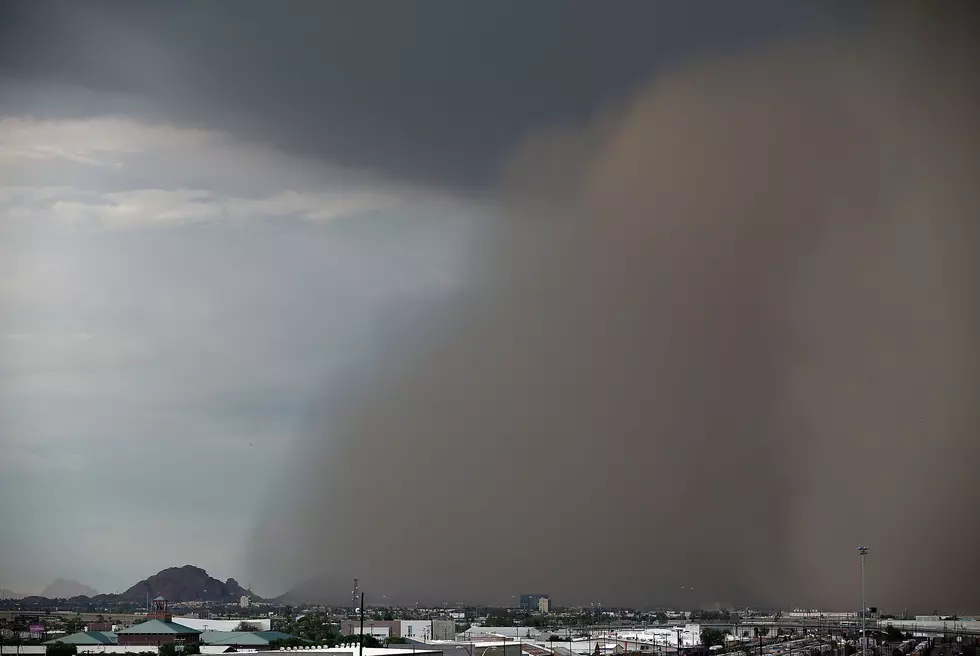
It appears to be a giant, reddish-orange monster consuming the horizon. And it's heading your way. Rolling across the desert floor, gobbling up the landscape, when this giant wall of dust and debris travels toward you at 60 miles an hour, it's time to seek shelter.

If you’ve lived in Arizona long enough, there's a good chance you've seen one of those massive walls of dust barreling across the desert.
Some of these dust storms are small and short-lived, but there are times when this bizarre weather pattern pulls out all the stops, and that, my friend, is what we call a haboob. As Wikipedia explains, this unusual term describes a severe weather event. It can turn a sunny Arizona afternoon into pitch-black chaos in minutes.

What is a Haboob?
The term haboob comes from the Arabic word “hab,” meaning “to blow”, and it’s been used by meteorologists for nearly a century, according to National Geographic.
While haboobs are common in the Middle East and North Africa, Arizona’s version is uniquely tied to our monsoon season. These giant dust storms are triggered by collapsing thunderstorms. They slam powerful downbursts of air down into the desert floor, kicking up dust in a dramatic wall. The resulting wall of dust can stretch for miles and tower thousands of feet high.
Learn more about Arizona's unique weather: When Is Arizona’s Summer Monsoon Season?

How Are Dust Storms Different in Arizona?
In the Middle East, Arizona's giant dust storms typically form from seasonal wind shifts. They also form much more suddenly and violently, thanks to our intense summer storms and dry soil conditions.
They're not just a fascinating visual spectacle; these storms can be dangerous. Visibility drops to near-zero, roads become hazardous, and the air fills with particles that can trigger respiratory issues.
Learn the Science behind Arizona's monsoon: Science & Hidden Forces Driving Arizona’s Fascinating Monsoons

What Should You Do If You're Caught in a Haboob Dust Storm?
So, what should you do if you’re caught in one? The Arizona Department of Transportation says it best: “Pull aside, stay alive.”

Turn off your lights, set your parking brake, and wait until the storm passes and the skies are clear enough to see.
If you're indoors? Close all your windows, if you can, run a HEPA filter, and avoid breathing in the dust. And if you’re immunocompromised, take extra precautions, because these storms can stir up toxic particles from old mines and wildfire debris.
LOOK: Biggest snowfalls recorded in Arizona history
Gallery Credit: Stacker
The Top 20 Leading Causes of Death in Arizona
Gallery Credit: Val Davidson
11 Unbelievably Odd Things You'll Only Find in Arizona
Gallery Credit: Val Davidson/TSM
More From K101