
How To Stay Safe During An Arizona Haboob
Has the weather seemed wild to you this year? We’ve had record heat, intense monsoons, a tornado forming, an earthquake, and sudden dust storms. It feels like Arizona has faced just about every challenge from Mother Nature.
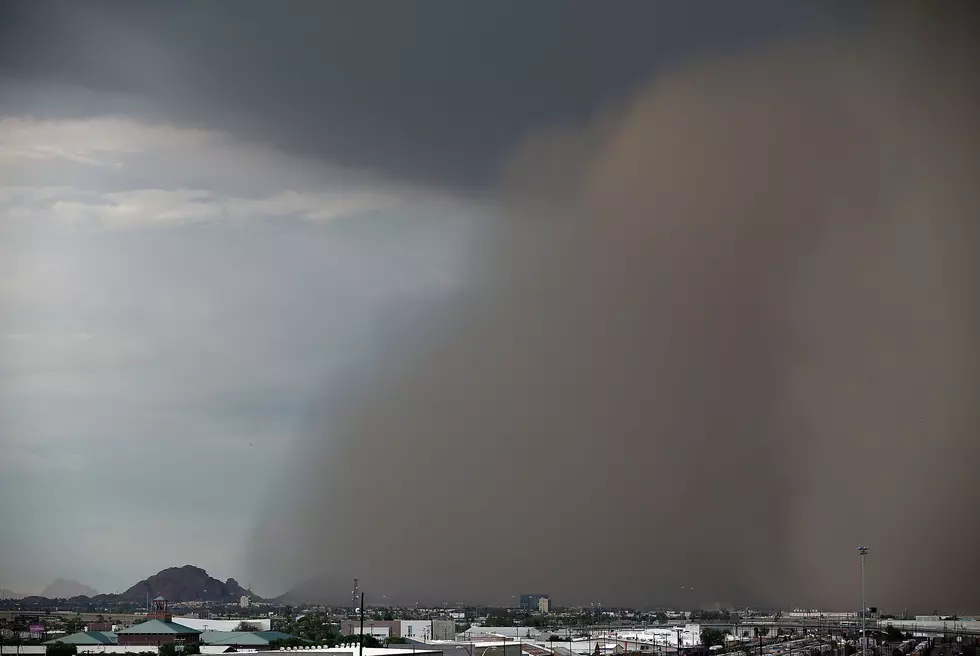
Have you ever been caught in a haboob? It’s that huge, reddish-orange dust storm that looks like it’s swallowing the horizon as it moves toward you. I’ve experienced a few, and it’s one of Arizona’s strangest and least enjoyable weather events. Once you’ve been in a haboob, you never forget it.


Arizona's Most Intimidating Weather Phenomenon
If you’ve spent time in Arizona, you’ve probably seen a wall of dust moving across the desert. Some dust storms are short and harmless, but others become huge, fast-moving storms called haboobs.
These massive dust walls can move as fast as cars on the highway and quickly turn a sunny afternoon into darkness. It’s one of the most unforgettable weather events in Arizona.
RELATED: Arizona Monsoon Floods, What Drivers Need To Know

What Exactly Is a Haboob?
The word "haboob" comes from the Arabic word hab, which means "to blow." National Geographic and Wikipedia say the term has been used to describe intense dust storms for decades.
In Arizona, haboobs usually happen during monsoon season. The Weather Channel explains that they form when thunderstorm downdrafts hit the desert floor, sending large amounts of dust into the air. This can create a dust wall that stretches for miles and rises to thousands of feet.
READ ALSO: Science & Hidden Forces Driving Arizona’s Fascinating Monsoons

Why Arizona's Dust Storms Stand Out
Unlike dust storms in other places, Arizona’s haboobs can form very quickly during the summer monsoon season.
They are impressive to watch, but also dangerous. Visibility can drop to nearly zero, roads can become very hazardous, and dust can worsen breathing problems.

READ ALSO: SSVEC Restored Power in Willcox After Thunderstorms
To Do If You're Caught In One
The Arizona Emergency Information Network advises drivers to use extreme caution if they’re caught in a dust storm.
If you are driving, pull off the road safely, turn off your lights, set your parking brake, and wait for the storm to pass. If you are inside, close all windows and doors, use air filters if you can, and try to avoid breathing in dust, especially if you have breathing problems or a weak immune system.
Arizona doesn’t do anything small—not even the weather. Luckily, haboobs usually pass quickly. If you stay patient and careful, you’ll have a great, if wild, story to tell your family.
LOOK: See how much gasoline cost the year you started driving
Gallery Credit: Sophia Crisafulli
KEEP READING: Check out these totally awesome '80s toys
Gallery Credit: Angela Underwood
The ’90s Are Back: Let's Look at the Famous Faces Who Made the Decade Iconic
Gallery Credit: Stephen Lenz
More From K101


